
Visit us on Facebook!
NEWS
Plug-in solar could help renters save on power
By Henry Schwann
Worcester Telegram & Gazette, US Today Network, July 17, 2026
With commentary by Paul Popinchalk of 350 Central Mass
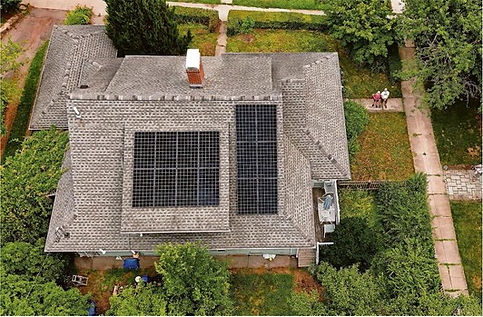
Worcester homeowners Paul and Nancy Popinchalk’s Midland Street home has solar.
Worcester, like many cities, has a ton of renters. Home could be in one of the city’s 5,000 three-deckers or one of many new apartment buildings popping up like weeds. Skyrocketing rents are the norm, but many renters don’t live in buildings with solar panels that could lower their electricity bills. They either can’t afford the expense or most likely have no say in whether the building owner will add rooftop solar. Their situations could change because there’s a relatively new technology, at least in the U.S., called plug-in solar or balcony solar. An individual panel plugs into a wall outlet and the power it generates can produce enough juice to run household appliances. It can also cut monthly electricity bills up to 20%, according to some experts.
The panels are widely used in Europe, and several U.S. states have passed laws to speed up their use. Others, like Massachusetts, are in the process of taking a hard look at the technology.
Plug-in solar is included in an energy affordability bill that Massachusetts lawmakers are negotiating before the current legislative session ends July 31.
Lawmaker: Not so fast
State Sen. Mike Barrett, a Lincoln Democrat who is considered a leading proponent of clean energy, cautioned that Massachusetts residents shouldn’t expect the bill to have all the regulatory and safety issues figured out by the end of July – so don’t count on Massachusetts residents rushing out to stores anytime soon to get their hands on the panels.
“We’re not quite there,” said Barrett. “There are some grey areas to work out.”
Those include, according to Barrett, the need for national safety standards which makes it unclear when stores will stock them. He also wants to see packaging with an abundance of safety labels and simple instructions so residents don’t have to pay an electrician to install the panels. Plus, most solar including rooftop requires an interconnection agreement with the local utility to connect to the grid resulting in delays that drive up costs for buyers.
Worcester homeowner Paul Popinchalk’s Midland Street home has solar.
Last year, Utah was the first state in the U.S. to approve plug-in solar for 1,200-watt systems that ended the requirement for interconnection agreements because the amount of energy discharged back to the grid is miniscule. Sales have stalled, according to reports, because there isn’t a national safety standard.
Could become a big deal in Worcester
When safety and regulatory policies are in place, then Barrett sees plug-in solar becoming a big deal in cities like Worcester because many renters have been shut off from solar. Homeowners are another potential customer base, especially those who don’t want rooftop panels or can’t afford them.
“It’s perfect for the renter, condo owner and homeowners,” said Barrett of plug-in solar. It typically cost $500 to $1,500 for a panel and Barrett believes the expense will be recovered in three years from savings on electricity bills..
“That’s a good deal,” he said.
How do power companies feel about it?
Some advocates claim investor-owned utilities oppose plug-in solar because it generates power off the grid that they can’t charge customers for. One is Paul Popinchalk, a retired energy engineer living in Worcester who is a member of the climate-action organization 350 Central Mass. He believes plug-in solar is an affordable way to lower energy bills. “That’s why utilities don’t like it,” he said.
National Gird noted in an email that it’s concerned about safety and reliability, not revenues. “While plugin solar may offer some customers another way to help manage energy costs, it will be important to ensure any proposal includes appropriate safeguards to protect customers, utility workers and the electric grid.”
Eversource, Worcester’s natural gas supplier, shares the safety concern. A company statement said only approved plug-in panels with built-in safety features should connect to the grid to protect customers and Eversource workers.
“We understand that testing is taking place with certification agencies towards meeting these goals, which we believe is a necessary first step,” said Eversource.
One worry is faulty installation of plug-in panels could overload a circuit in a home and cause a fire.
Another is excess energy discharged to the grid that could overwhelm the system and electrocute line workers. The odds of that happening are low, said Worcester Polytechnic Institute engineering professor Carrick Eggleston, because plug-in panels have a built-in feature that shuts them down during a power outage.
“That’s a point worth emphasizing,” said Eggleston.
Too much momentum
Barrett isn’t aware of any lobbying by utilities to kill plug-in solar language in the energy affordability bill. There’s too much momentum, he said, for clean energy solutions in Massachusetts for the utilities to stand in the way.
Besides, Barrett believes the companies know they will have plenty of revenue opportunities as demand for electricity increases as Massachusetts moves on the electrification fast track with heat pumps and other technologies.
“It’s wise of the utilities to lighten up, which appears to be what they’re doing,” said Barrett.
Location is key
To fully benefit from plug-in, Eggleston said the panels must be in the direct path of the sun with no obstructions for several hours daily. If that’s not possible, then the financial benefits are greatly diminished.
“It’s potentially extremely useful in cutting electricity costs, 20% if it’s a good situation, which is probably as much as you can expect,” said Eggleston.
John Odell, Worcester’s chief sustainability officer, believes plug-in solar offers relatively low upfront costs that can be recouped in three to four years by lower electricity bills, based on current National Grid rates. Plus, the panels are portable, so a renter can take them when it’s time to move.
Good exposure to the sun is the “key piece,” according to Odell. He cautioned anyone laying out cash for a plug-in panel should temper expectations because the amount of power generated doesn’t compare to rooftop solar. Odell believes a plug-in panel could cut electricity use by an average of 5% to 10% monthly.
He also noted that half of Worcester’s renters can’t take advantage of plug-in because their apartment faces north. Southern exposure provides maximum benefit.
Another factor is plug-in doesn’t come with any financial incentives or rebates to lower upfront costs. “The unit’s small size doesn’t have the electricity incentives that rooftop units get, so people need to be aware of that when they buy, but they’re still cost-effective,” said Odell.
As for utilities’ concerns about lost revenue, Odell thinks plug-in won’t move the needle too much unless sales take off.
A version of plug-in with cost savings
Popinchalk described the solar panels at his home as a larger version of plug-in.
An inverter on the side of his house takes the direct current power from the panels and converts it to alternating current power for his home. It’s different from plug-in that has a built-in inverter.
Power he doesn’t need is discharged to the grid. In fact, the set up is so advantageous for Popinchalk that he hasn’t paid an electric bill to National Grid in four years. He thinks plug-in solar will take off in Worcester once all the regulatory issues are squared away.
“This opens up the possibility of bringing solar to more people,” said Popinchalk, “From a behavioral perspective, it will help people understand the benefits of transferring to a clean-energy economy.”
Contact Henry Schwan at henry.schwan@telegram.com. Follow him on X: @henrytelegram
The following two letters to the editor (LTE) of the Worcester Telegram & Gazette newspaper respond to an opinion piece published in the T&G on Sept. 14 that supports expansion of natural gas pipeline capacity into New England. The authors of these LTEs are members of 350 Central Mass.
Natural Gas Is Not the Solution to Mass Power Needs
The Opinion “Natural Gas Helps Power State’s Economy” in the 9/14/25 T&G is extremely thorough in its references on the subject of natural gas (methane) as a source of generating electricity to the state.
Rather than commenting on the desirability of data centers built for AI, it is important to focus on the mentioned “unfortunate threat to grid strength and dependability” due to “delays, shutdowns and revoked approvals of offshore wind projects that would have supplied power to well over 1.5 million Massachusetts businesses and homes.”
What the writer is saying is that due to the federal government canceling offshore wind projects this year, the solution to increased electricity requirements is the expansion of the Algonquin Pipeline, the completion of the Constitution Pipeline, and the development of Project Maple (more gas lines). One canceled offshore wind project, Revolution Wind, was 80% complete and scheduled to provide electricity throughout New England in 2026.
It makes one wonder why, if New England electricity use “will increase 11% in the next decade,” would the federal government be canceling offshore wind projects a source of electricity? The answer is clear: the beneficiary of the canceled wind projects is the natural gas industry. The natural gas utilities are paid a guaranteed rate of return by their customers (me and you) on pipeline infrastructure projects for decades.
Let’s not be fooled by this Opinion which clearly benefits the natural gas industry.
Denis Mahoney
Holden, MA
More Pipelines, More Emissions
Enlarging gas pipeline capacity into New England would do little to get more gas into New England or lower heating, cooking and electricity costs for us consumers.
The Constitution pipeline, for example, referred to in the Telegram opinion piece of Sept. 14, would terminate near Albany, New York, where it would connect to pipes that already carry gas into New England. But because the existing pipelines inside New England are relatively small, the arrangement creates a severe bottleneck before gas even gets to us.
In 2023, Massachusetts regulators laid out plans for reaching net-zero emissions by 2050. A major piece of this plan is shifting from gas to electricity for cooking and to devices like high-efficiency electric heat pumps for both heating and cooling homes and businesses. This approach addresses New England’s growing appetite for energy and attendant price and reliability worries by simply burning less gas: leveraging a portfolio of options that include solar, offshore wind, battery storage, energy efficiency and demand-response programs.
These resources create “virtual power plants” — collections of geographically distributed resources that together help meet consumer demand, supply clean power to the electric grid, avoid often severe gas price spikes, and can be built more quickly and less expensively than new fossil fuel infrastructure. And more pipelines would lead to more harmful emissions that in turn increase the risks to the health of all living things.
Ken McDonnell
Holden, MA

"GOING FOR THE GREEN: Worcester’s effort to fight climate change needs buy-in from homeowners, businesses," Worcester Telegram, Nov. 18, 2021. Paul Paupinchalk of 350 CM on the Green Worcester Plan.
The Central Massachusetts regional chapter of the Green-Rainbow Party has chosen 350 Central Mass to be the 2021 recipient of the John Helfrick Memorial Award.
350 Central Mass is being honored for its efforts to educate the community on the climate emergency; organize legislative advocacy at federal, state, and local levels; and spearhead formation of the Worcester Climate Strike Coalition of 2019. Janet Cason, President of 350 Central Mass, accepted the Award on Oct. 11, 2021, from David Spanagel, Secretary of the Central Mass Green-Rainbow regional chapter.
“Our members thought so highly of 350 Central Mass as an organization that embodies the values of Ecological Wisdom, Personal and Global Responsibility, and Future Focus and Sustainability,” said Mr. Spanagel. “350 Central Mass joins a diverse and yet highly distinguished group of local organizations and individuals whose efforts in various areas have merited similar recognition.”
The biennial Helfrick Award was established more than 15 years ago as a way of recognizing individuals and organizations that are actively fulfilling the Ten Key Values of the Green Party in central Massachusetts communities, regardless of nominees’ own political affiliations. The Key Values are:
-
Grassroots democracy
-
Social justice and equal opportunity
-
Ecological wisdom
-
Nonviolence
-
Decentralization
-
Community-based economics
-
Feminism and gender equality
-
Respect for diversity
